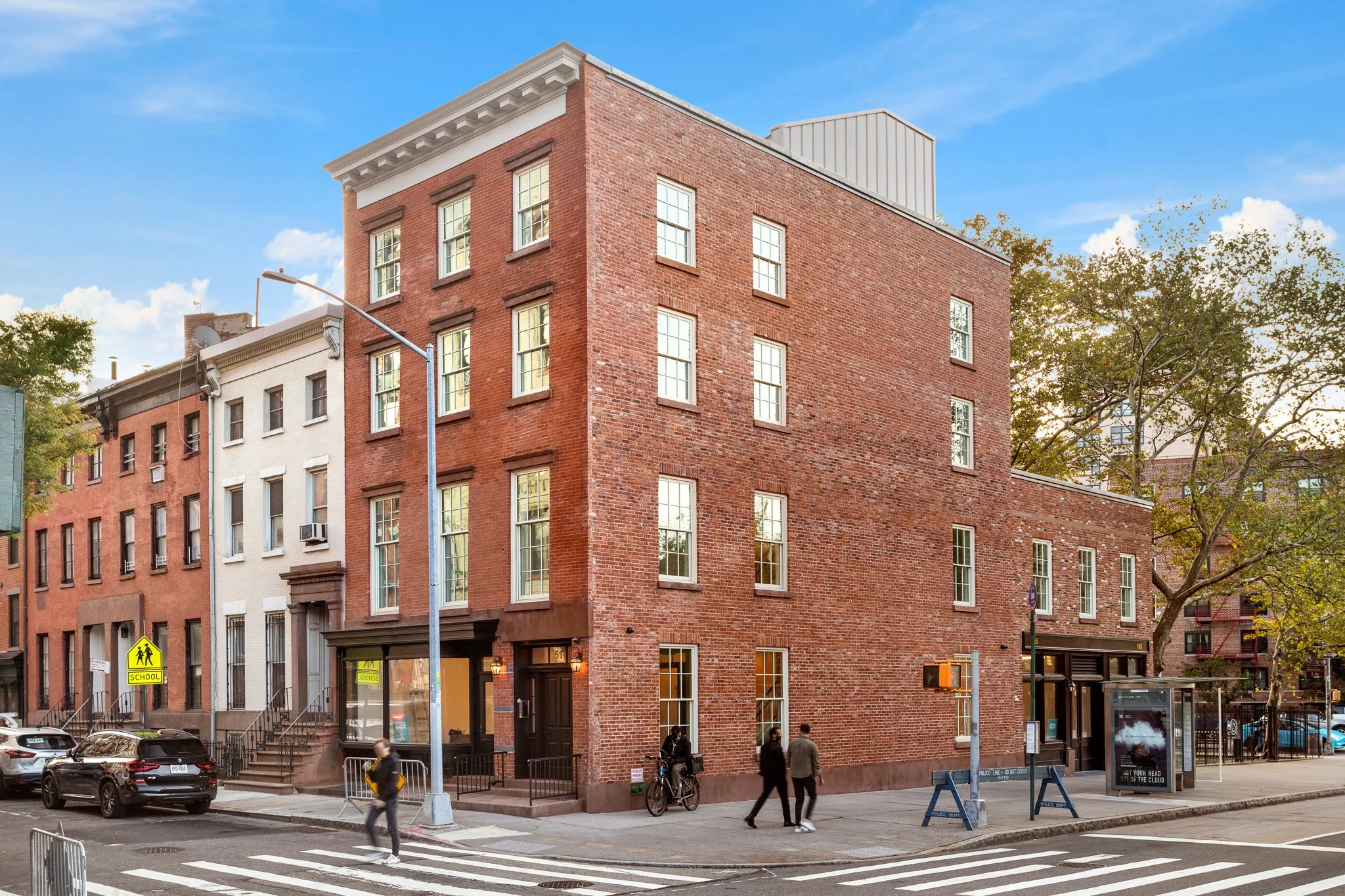
Buying And Selling

Buying and Selling in New York City: Step by Step
-
Buying an Apartment in New York City: Step by Step
1. First contact with Coast Property Inc.
Reach out through the Contact page or by phone. We'll set up a short call to cover what you're looking for: neighborhoods, size, budget, timeline, and whether you're buying to live in or as an investment.2. Get your finances in order
Before we start showing apartments, you'll need:A mortgage pre-approval letter from a lender (or proof of funds if paying cash)
A rough picture of your assets, income, and debt — co-op boards will ask for all of it
A sense of your post-closing liquidity. Many co-ops want to see 1–2 years of maintenance and mortgage payments in reserve after closing
Closing cost budget: roughly 2–4% of purchase price for a condo, 1–2% for a co-op. Add the 1% mansion tax if the price is $1M or more (it steps up above $2M)
3. Condo vs. co-op
This decision shapes the entire process.Condo: you own real property. Board has a right of first refusal but rarely blocks a sale. Easier to rent out, more flexible for investors, higher purchase price and closing costs.
Co-op: you own shares in a corporation and hold a proprietary lease. Board interviews and approves buyers, and can reject without reason. Stricter financing limits (often 70–80% max) and subletting rules. Generally lower prices.
4. Hire a real estate attorney
NYC deals require an attorney on both sides. Retain yours before you make an offer so they're ready when the contract arrives. Fees typically run $2,500–$5,000. We can refer you to attorneys we work with.5. Search and tour
We'll send listings that fit your criteria and schedule showings. Things to check on each visit:Monthly common charges or maintenance, and any current or upcoming assessments
Building financials, reserve fund, and any pending litigation
Sublet and pet policies
Age of major systems (elevators, boiler, roof, facade work under Local Law 11)
6. Make an offer
Offers are made in writing through us to the listing broker. In NYC an accepted offer is not binding — either side can walk until the contract is signed. Along with the price, we'll submit your pre-approval or proof of funds and a short financial summary. Negotiation usually takes a few days.7. Deal sheet
Once terms are agreed, the brokers circulate a deal sheet with the price, contact info for both attorneys, contingencies, and target closing date. This kicks off the attorney work.8. Due diligence and contract review (about 5–10 business days)
Your attorney reviews:The offering plan and amendments
Two years of building financial statements
Board meeting minutes
The building's bylaws, house rules, and sublet policy
Title report (condos)
This is where problems surface — a big upcoming assessment, a building with thin reserves, or a lawsuit. If something serious turns up, you can still walk away.
9. Sign the contract and pay the deposit
You sign first and wire a deposit, typically 10% of the purchase price, to the seller's attorney's escrow account. The seller countersigns and the deal is binding. Note whether the contract has a mortgage contingency — many NYC contracts do not, meaning you're obligated to close even if financing falls through.10. Mortgage application (if financing)
Submit the full application right after contract signing. The lender orders an appraisal and reviews the building. A mortgage commitment typically takes 30–45 days.11. Board package
For a co-op this is the biggest piece of work. Expect to provide:Completed application and financial statement
Two to three years of tax returns and W-2s
Bank, brokerage, and retirement statements
Employment verification letter
Personal and professional reference letters
Landlord reference if you currently rent
Signed contract and mortgage commitment
We help you assemble and package it. Condos require a similar but lighter package for the right-of-first-refusal waiver, and there's no interview.
12. Board interview (co-ops)
Once the package is reviewed, the board schedules an interview. It's usually 20–45 minutes. Be on time, dress as you would for a business meeting, answer questions directly, and don't volunteer renovation plans. Approval typically comes within a week or two afterward.13. Clear to close
Your attorney and the lender coordinate the closing date once board approval (or the condo waiver) and the mortgage commitment are in hand. Building management provides a closing statement with any transfer fees, flip taxes, and move-in deposits.14. Final walk-through
Within 24–48 hours of closing, we walk the apartment with you to confirm it's in the agreed condition, the seller's belongings are out, and any negotiated repairs are done.15. Closing
Typically held at the seller's attorney's or lender's office, though many are now done remotely. Bring photo ID and your certified funds or wire confirmation. At the table:You sign the mortgage documents (if financing)
Deed (condo) or stock certificate and proprietary lease (co-op) transfers to you
Closing costs are paid: transfer taxes, title insurance, lender fees, attorney fees, building fees
You receive the keys
16. After closing
Set up your common charge or maintenance payments with management, schedule your move-in per building rules, update your address, and file for any applicable tax abatements or exemptions.Typical timeline: 60–90 days from accepted offer to closing for a condo; 90–120 days for a co-op, driven mostly by board review.
If this is for the coastpropertyinc.com site, I can trim it to a shorter page version or split it into a condo track and a co-op track.
-
Selling an Apartment in New York City: Step by Step
1. First contact with Coast Property Inc.
Reach out through the Contact page or by phone. We'll set up a call to cover the apartment, your timeline, whether you're buying something else at the same time, and any building rules that affect a sale.2. Pricing and market review
We prepare a comparative market analysis using recent closed sales and active listings in your building and neighborhood. Together we set a list price and a floor you're comfortable with. Pricing right at the start matters more than anything else — apartments that sit and get cut repeatedly sell for less.3. Hire a real estate attorney
Retain your attorney early. They'll prepare the contract of sale, collect the building documents buyers' attorneys will ask for, and handle the closing. Fees typically run $2,500–$5,000.4. Gather building and unit documents
Having these ready shortens the buyer's due diligence:Offering plan and amendments
Two years of building financial statements
Board minutes
Bylaws, house rules, sublet and pet policies
Your most recent maintenance or common charge statement and any assessment notices
Floor plan, and any alteration agreements or permits for work you've done
Property tax bill and any abatement details (condos)
Check the building's sale requirements too: flip taxes, transfer fees, move-out deposits, and whether the board needs advance notice of a sale.
5. Sign the listing agreement
An exclusive listing agreement sets the term (usually 6 months), the commission, and how the listing will be marketed. Commission is negotiated at this stage, including the portion offered to a buyer's broker.6. Prepare the apartment
Small work pays off: paint, fix anything broken, declutter, deep clean. Staging, even partial, helps in most price ranges. We'll advise on what's worth doing and what isn't for your unit.7. Photos, floor plan, and listing
We arrange professional photography, a measured floor plan, and the listing copy. The listing goes to the RLS (the NYC broker database), StreetEasy, Zillow, and the Coast Property Inc. site. Seller disclosure forms are completed at this stage — in NYC most sellers provide a credit in lieu of the Property Condition Disclosure Statement, which your attorney will handle.8. Showings and open houses
We coordinate showings around your schedule and the building's rules. Expect the first two to three weeks to be the busiest. We'll give you feedback after each showing and adjust price or presentation if the response is flat.9. Offers and negotiation
Every offer comes with the buyer's pre-approval or proof of funds and a financial summary. We evaluate offers on more than price: financing vs. cash, contingencies, timeline, and how likely the buyer is to pass the board. An accepted offer is not binding in NYC until contracts are signed, so we keep showing until then.10. Deal sheet
Once terms are agreed, the brokers circulate a deal sheet to both attorneys with the price, contingencies, and target closing date.11. Contract
Your attorney drafts the contract and sends it with the building documents to the buyer's attorney. The buyer does due diligence (typically 5–10 business days), then signs and sends a 10% deposit to your attorney's escrow account. You countersign and the deal is binding. Until that point either side can walk, so speed matters.12. Board package and approval
The buyer assembles their board package. We keep the process moving and chase missing pieces. Co-op boards interview the buyer and can reject; if that happens, the contract is typically voided and the deposit returned, and we go back to market. Condos issue a waiver of the right of first refusal, usually within 30 days.13. Mortgage commitment (if the buyer is financing)
The buyer's lender appraises the apartment and reviews the building. If the contract has a mortgage contingency, the buyer can cancel if they don't get a commitment by the deadline. If there's no contingency, they're obligated to close regardless.14. Prepare for closing
Once board approval and the mortgage commitment are in, the attorneys set the closing date. In the meantime:Pay off any outstanding balance with the building and request a closing statement from management
Provide mortgage payoff information to your attorney if you have a loan
Arrange your move and reserve the elevator per building rules
Cancel or transfer utilities and insurance for the closing date
15. Final walk-through
The buyer walks the apartment within 24–48 hours of closing. It should be empty, broom-clean, and in the condition agreed in the contract.16. Closing
Typically at your attorney's or the lender's office; many are now remote. You sign the deed (condo) or transfer the stock certificate and proprietary lease (co-op). From your proceeds come:NYC and NYS transfer taxes (about 1.4% combined under $500K, 1.825% at $500K and above, higher above $3M)
Any flip tax or building transfer fee
Broker commission
Attorney fee and mortgage payoff
Non-resident sellers also have NYS withholding at closing
You hand over keys and receive the balance by wire.
17. After closing
Keep the closing statement for your taxes. If the apartment was your primary residence, the federal capital gains exclusion may apply ($250K single / $500K married). Confirm with your accountant.Typical timeline: 30–60 days on market on average, then 60–90 days to close for a condo and 90–120 days for a co-op.
-
Reference document - rates current as of August 2026. Figures are typical ranges and vary by price, building, lender, and deal structure. Confirm every number with counsel, the title company, and a CPA before relying on it in a net-sheet.
Quick reference: who pays what on a standard resale
Buyer paysSeller paysNYS Mansion Tax (1%-3.9% at $1M+)NYC Real Property Transfer Tax (RPTT)Mortgage Recording Tax (condos/houses only)NYS Real Estate Transfer Tax (RETT)Title insurance (condo) or lien search (co-op)Broker commissionOwn attorney + bank attorneyFlip tax (most co-ops; some condos)Lender fees, appraisal, points, escrowsOwn attorneyBuilding application, move-in, recognition agreementMove-out fee, managing agent processingRecording fees (deed, mortgage)Mortgage payoff, satisfaction, UCC-3Common charge / tax prorations forwardProrations through closing; nonresident withholding
The exception: new development sponsor sales routinely shift the NYC and NYS transfer taxes - and sometimes the sponsor's attorney fee - onto the buyer. That is a contract term, not law, and it is negotiable before signing, never after.
Part 1 - Transfer taxes (the part your draft had wrong)
There are effectively five transfer-type taxes in play on a NYC residential deal. Three apply to most sales; two only above certain price points.
1.1 NYC Real Property Transfer Tax (RPTT) - SELLER
Applies to residential conveyances where consideration exceeds $25,000 (note: the $500 threshold in the earlier draft is the state test, not the city one).
Sale priceRate$500,000 or less1.00%More than $500,0001.425%
The rate applies to the entire consideration, not just the amount over the threshold - so $500,000 owes $5,000 and $500,001 owes $7,125. Commercial and 4+ unit classifications use a different schedule (1.425% / 2.625%); confirm the class before quoting a rate on a mixed-use or bulk deal.
Filed on Form NYC-RPT, due within 30 days of closing.
1.2 NYS Real Estate Transfer Tax (RETT) - SELLER
0.4% ($2 per $500) on all conveyances statewide where consideration exceeds $500.
Plus an additional 0.25% ("additional base tax," effective July 1, 2019) on NYC residential conveyances of $3,000,000 or more, and on NYC commercial conveyances of $2,000,000 or more - bringing the state rate to 0.65%.
Your draft omitted this surcharge entirely. Filed on Form TP-584-NYC.
1.3 Combined seller transfer tax burden
Sale priceNYC RPTTNYS RETTCombinedUnder $500,0001.00%0.40%1.40%$500,000 - $2,999,9991.425%0.40%1.825%$3,000,000 and up1.425%0.65%2.075%
On a $5M sale that is roughly $103,750 off the top before the seller sees a dollar.
1.4 Mansion Tax - BUYER, not seller
This is the material correction to your draft. The mansion tax (NY Tax Law Section 1402-a) is imposed on the grantee. The buyer pays it, at closing, on Form TP-584-NYC. The seller becomes liable only if the buyer fails to pay or is exempt - which is why sellers' counsel confirms payment at the table rather than budgeting for it.
The rate applies to the entire purchase price, not the increment above the bracket. The brackets below apply inside NYC only; anywhere else in New York State the rate is a flat 1% on any residential purchase of $1M+.
Purchase priceRate$1,000,000 - $1,999,9991.00%$2,000,000 - $2,999,9991.25%$3,000,000 - $4,999,9991.50%$5,000,000 - $9,999,9992.25%$10,000,000 - $14,999,9993.25%$15,000,000 - $19,999,9993.50%$20,000,000 - $24,999,9993.75%$25,000,000 and above3.90%
Your draft was missing the $20M-$24.99M tier and put 3.9% at $20M rather than $25M.
The cliffs are real money. $999,999 owes nothing; $1,000,000 owes $10,000. $1,999,999 owes $19,999.99; $2,000,000 owes $25,000. This is why so many contracts land at $995,000 or $1,999,000, sometimes with FF&E sold under a separate bill of sale. That separate-agreement structure gets scrutinized - have counsel paper it properly or don't do it.
Applies to co-ops as well as condos.
1.5 Gross-up when the buyer pays the seller's transfer tax
If the contract shifts the RPTT/RETT to the buyer (standard in sponsor sales), the tax the buyer pays on the seller's behalf is treated as additional consideration, so the tax is calculated on the grossed-up amount. It is a small but real bump, and it can push a deal across a bracket threshold. Have counsel run the circular calculation.
Part 2 - Seller costs
Common to condos and co-ops
Broker commission - 5% to 6%, negotiable Historically split roughly evenly between listing and buy-side brokers. Post-2024 NAR settlement, buy-side compensation is no longer published through the RLS/MLS; the seller may still offer a concession, negotiated separately and disclosed in the listing agreement. Commissions are not set by law and are fully negotiable - including tiered and flat-fee structures.
Seller's attorney - $2,500 to $5,000+ Higher for sponsor sales, estate and trust sales, foreign-seller/FIRPTA transactions, LLC-held title, and anything with a title cure.
Transfer taxes - see Part 1 (1.40% / 1.825% / 2.075% combined)
Managing agent / co-op transfer agent fees - $500 to $1,500 Processing, closing attendance, document prep, payoff coordination.
Move-out fee and elevator deposit - $250 to $1,500 Usually paid to the managing agent when the buyer's application is submitted. Deposits are often refundable.
Mortgage payoff costs - roughly $500 Payoff letter/pickup fee, satisfaction recording fee, bank processing. Condo: satisfaction of mortgage. Co-op: UCC-3 termination and return of the original stock and lease. The payoff balance itself is not a closing cost, but it reduces proceeds.
Prorations Common charges/maintenance and real estate taxes are prorated to the closing date. Unpaid special assessments are typically paid in full at closing unless the contract allocates otherwise - negotiate this explicitly; assessments are a frequent source of last-minute disputes.
NYS Equalization and Assessment fee - ~$75 to $200 (condo/deed transfers)
Recording fees - nominal on the seller side; the deed recording is customarily a buyer cost.
Nonresident withholding - 10.9% of the estimated gain If the seller is not a New York State resident on the date of sale, an estimated tax payment is required at closing:
Form IT-2663 for condos and real property
Form IT-2664 for co-op shares
This is a withholding, not a tax - it's reconciled on the following year's nonresident return. Cash-flow-wise it lands at the closing table, and it surprises out-of-state and out-of-country sellers constantly.
FIRPTA - 15% of gross sale price If the seller is a foreign person, the buyer is the withholding agent and must remit 15% of the gross price (not the gain) to the IRS. Reduced-withholding certificates are available but must be applied for well in advance. Foreign sellers should start this 60-90 days out.
Capital gains, separately from closing costs Federal capital gains + 3.8% NIIT where applicable, NYS income tax, and NYC resident income tax (top 2026 rate 3.876%). Section 121 exclusion of $250K/$500K applies only to a primary residence meeting the 2-of-5-year test. For a unit that has been rented, expect depreciation recapture at 25% and a partial or fully disallowed Section 121 exclusion. Section 1031 exchange is available for investment units but not for a primary residence.
Co-op-specific seller costs
Flip tax - the big one Not a government tax; a transfer fee imposed by the cooperative under the proprietary lease and bylaws. Common structures:
Percentage of gross sale price - most common, typically 1% to 3%
Percentage of net profit (sale price less purchase price, sometimes less capital improvements) - often 10% to 20% of profit
Flat dollar amount per share - e.g., $25-$100/share
Flat fee per transaction
Sliding scale by length of ownership - some buildings waive or reduce it after a holding period
The rate is fixed by the building's governing documents and is not negotiable. Who pays is sometimes fixed by the bylaws and sometimes negotiable between the parties. Pull the proprietary lease, bylaws, and any amendments early - a per-share formula in an older building can produce a very different number than 2% of price.
Note: a growing number of condominiums also impose a transfer fee or working capital contribution on resale. Read the bylaws; don't assume "condo means no flip tax."
Stock transfer tax - $0.05 per share NY State stock transfer tax on the co-op shares. Technically imposed and, under the long-standing rebate program, effectively refunded - but it still appears as a line item on many closing statements and some buildings/agents collect it. Verify treatment with the transfer agent.
Board package and processing fees Mostly a buyer cost (see Part 3), but sellers frequently pay a move-out fee, a transfer agent fee, and in some buildings a share of the application processing charge.
Payoff of share loan - release of the stock and lease from the lender, UCC-3 filing, and the lender's payoff processing fee.
Condo-specific seller costs
Waiver of right of first refusal - the board issues a waiver letter; some buildings charge $250 to $1,000 for it, and it is a scheduling gate for the closing.
Condo questionnaire fee - charged by the managing agent for the buyer's lender, $200 to $500, often billed to the seller.
Payoff and satisfaction of the recorded mortgage.
Part 3 - Buyer costs
Rules of thumb (financed purchase): co-op ~1%-3%; resale condo ~3.5%-4.5%; new development 5%-6%+. All-cash purchases drop meaningfully because the recording tax and lender lines disappear.
Common to both
Buyer's attorney - $2,500 to $4,000 ($3,000-$5,000+ for new development, where the offering plan review adds real hours)
Mansion tax - see Section 1.4, at $1M+
Bank attorney - $1,000 to $1,750 if financing
Appraisal - $500 to $1,500 (more for high-end or unusual units)
Loan application, credit report, tax service, flood cert - $500 to $1,500
Origination points - 0 to 3% of loan, elective
Prepaid interest, tax and insurance escrows - varies with closing date
Homeowner's / HO-6 insurance - first year prepaid
Building application and processing fees - $500 to $2,000
Move-in fee and refundable deposit - $500 to $1,500
Credit check / background check - $100 to $500
Condo-specific buyer costs
Mortgage Recording Tax - usually the largest line after the mansion tax Charged on the loan amount, not the price:
Loan amountBuyer's shareCombined statutory rateUnder $500,0001.80%2.05%$500,000 or more1.925%2.175%
The lender pays the remaining 0.25%, which is why you see both sets of figures quoted. Note the cliff: a $500,000 loan pays 1.925% on the entire balance where $499,999 pays 1.8%.
CEMA (Consolidation, Extension and Modification Agreement) - the buyer takes assignment of the seller's existing mortgage instead of recording a new one, and pays recording tax only on the new money. On a $1M loan against a $600K existing balance, that saves roughly $11,550. Requires both lenders to cooperate, adds 2-4 weeks, and involves assignment fees of $500-$2,000 typically split between the parties. Raise it at contract negotiation, not the week before closing. Not available on co-ops.
Title insurance - regulated rate schedule, scales with price. Roughly $4,000-$4,500 on a $1M condo; $3,000 to $8,000+ across typical NYC price points. Lender's policy plus owner's policy. Add:
Municipal/departmental searches - $350 to $500
Title closer gratuity - $150 to $300
Endorsements (survey, environmental) - varies
Recording fees - deed and mortgage recording, RP-5217NYC filing: $250 to $750 all-in.
Common charge and tax adjustments - prorated forward from closing.
Co-op-specific buyer costs
Co-op shares are personal property, so a share loan is never recorded as a mortgage. That means:
No mortgage recording tax - the single largest saving
No title insurance - replaced by a lien search at $350 to $450, plus a UCC-1 filing fee of ~$100 if financing
Add instead:
Recognition agreement fee (Aztech) - $200 to $500
Board package fee, credit and background checks - $500 to $2,000 combined
Board interview - no fee, but budget the calendar time
Maintenance adjustment - prorated forward
Some buildings require the buyer to pay all or part of the flip tax - check the proprietary lease
Together, the recording tax and title insurance exemptions mean the same $1,000,000 purchase closes roughly $15,000-$20,000 cheaper as a co-op than as a condo.
New development / sponsor unit extras
NYC + NYS transfer taxes shifted to buyer - ~1.825% to 2.075%, grossed up
Sponsor's attorney fee - $2,500 to $5,000
Working capital contribution - commonly 1 to 2 months of common charges, non-refundable
Reserve fund contribution - per the offering plan
Resident manager's unit contribution - in some plans
All of these are contract terms set by the offering plan and its amendments. In buildings with standing inventory, sponsors regularly absorb some or all of them rather than cut the published ask. In a fast-moving sellout they will not.
Part 4 - Worked examples
$1,500,000 resale condo, 80% financing ($1.2M loan)
BuyerSellerMansion tax (1.0%)$15,000Broker commission (5.5%)$82,500Mortgage recording tax (1.925%)$23,100NYC RPTT (1.425%)$21,375Title insurance + searches~$6,000NYS RETT (0.4%)$6,000Attorney + bank attorney~$4,500Attorney$4,000Lender fees, appraisal, escrows$4,000-$10,000Managing agent, payoff, misc.~$1,500Recording, building fees~$2,500Total~$55,000-$61,000 (3.7%-4.1%)Total~$115,000 (7.7%)
$1,500,000 co-op, 80% financing ($1.2M share loan), 2% flip tax
BuyerSellerMansion tax (1.0%)$15,000Broker commission (5.5%)$82,500Mortgage recording tax$0NYC RPTT (1.425%)$21,375Lien search + UCC-1~$550NYS RETT (0.4%)$6,000Attorney + bank attorney~$4,000Flip tax (2%)$30,000Lender fees, appraisal$3,000-$8,000Attorney$4,000Board package, move-in, recognition$2,000-$3,000Transfer agent, move-out, payoff~$2,000Total~$25,000-$31,000 (1.7%-2.1%)Total~$146,000 (9.7%)
The co-op is roughly $30,000 cheaper for the buyer and $30,000 more expensive for the seller at the same price. Worth keeping in view when advising on either side.
Part 5 - Planning notes
Bracket cliffs, in order of size. $1,000,000 (mansion tax, $10,000); each mansion tax tier above it; $3,000,000 (state transfer tax steps to 0.65%); $500,000 loan amount (recording tax steps to 1.925% on the whole balance); $500,000 price (RPTT steps to 1.425%). Structure offers and loan amounts with the brackets in view.
CEMA is free money on the right condo resale, but it needs lead time and lender cooperation. Ask at contract, not at clear-to-close.
Read the proprietary lease or condo bylaws before quoting a net sheet. Flip tax formulas, transfer fees, and assessment allocation are where net-proceeds estimates go wrong.
Nonresident and foreign sellers need 60-90 days of lead time for IT-2663/IT-2664 planning and FIRPTA reduced-withholding certificates.
Sponsor concessions are pre-signature only. Every sponsor line item is negotiable until the purchase agreement is executed and none of them after.
Watch the pied-a-terre proposal. A recurring annual tax on high-value non-primary residences has resurfaced in Albany budget discussions in 2026. It would be an ownership tax rather than a transfer tax, but it would change the carry math on investment and second-home units. Not enacted as of this writing - confirm current status before relying on it either way.
Sources
NY Tax Law Section Section 253, 1402, 1402-a (mortgage recording tax, RETT, mansion tax)
NYS Publication 576 (real estate transfer tax) and Publication 577 (mansion tax)
NYS Forms TP-584-NYC, IT-2663, IT-2664
NYC Department of Finance, Form NYC-RPT and RPTT rate schedules
IRC Section 897 / Section 1445 (FIRPTA), Section 121, Section 1031
Not legal, tax, or accounting advice. Rates and thresholds change; verify before use in a live transaction.

Let’s Work TogetherIf you're interested in working with us, complete the form with a few details about your project. We'll review your message and get back to you within 48 hours.